Showing posts with label Collaboration. Show all posts
Showing posts with label Collaboration. Show all posts
Tuesday, November 13, 2012
Banned Book Week--Banned Websites Awareness Day: A Contrast
Banned Book Week has become a mainstay cause and publicity event for libraries across the country. It is an important week to advocate for the intellectual freedom that author and librarians seek to support and uphold in public spaces. I can't help but feel, though, that some of our advocacy can feel rather antiquated today and often puts a softened veneer on the face of censorship. Many of the displays I have seen often highlight books that have been banned in the past, but are in most cases deemed culturally acceptable now. Even displays that discuss more recent books, such as Harry Potter and Hunger Games, fit into this category. This approach presents censorship as something fading into obsolescence, and thus takes the urgency out of the message.
Now not all programs follow this model, many have found great ways to better connect children to the issues, whether through viral readings, book clubs, or more, but I think it is hard for children to grasp the concept of banned books if we discuss books they can read. Perhaps the brave, but scary challenge is to discuss those books that continue to be challenging to today's culture. I have seen some great physical displays placing books behind bars, or police caution tape. What if the books behind these barriers were books that actually more relevant to children today? What if books that had actually recently been challenged in the district were displayed and openly discussed? What if web resources were the primary examples used?
I think too often we treat Banned Book Week as a remembrance week. "Remember all the awful things we used to do, but look at how much better we are now." By oversimplifying and antiquating the story of censorship we risk removing the emotion that is central to such cases today. Children are motivated by their own engagement in an issue and librarians miss an opportunity to gain young fervent advocates in this way.
A second concern is the medium we focus on. We spend a whole week discussing banned print books, but only one day advocating for Banned Website Awareness. That inequity does not match the relative role we have placed on these tools in the modern library. As librarians, we have made massive strides over the past decade to better incorporate digital materials and technology initiatives. We have gone so far as to make these standards of our profession. However, while we have been aggressively forward-thinking in providing users access to and information about new mediums, we have fallen behind in defending everyone's right to access information via the internet.
For children, I think this is an even bigger area where we can engage them to become participants in their own advocacy. This ascribes to the active-based learning that teachers and librarians are seeking to promote everywhere. A great Banned Website Day project I saw on the New York Times' Learning Network blog asked students to explore if there were restrictions and filters placed on their school computer use, and to challenge these practices by examining their effects. Such programs appeal to kids through the technologies that they are using, present the urgency and presentness of these issues, and allow for direct student advocacy. This type of contemporary engagement is too often missing from Banned Book Week. I think we need to shift the focus in our advocacy against censorship in the same ways that we have shifted our focus in our libraries.

Monday, November 12, 2012
Blog Comments
Here are my comments on professional blogs:
School Library Monthly: Share the Wealth
What a great post. We all come up with so many great ideas in development, but they do not mean much until we place them in practice. I think the question you ask and the framework for answering it are great.
But Barbara Jansen’s question is a great one: “what will you do on Monday based on what you learned and contributed this weekend.”
You really took this to heart and the graphical answer does a great job at getting down to brass tacks. That is an approach I am going to steal myself. The more we can do to think about these great ideas and approaches in the context of our own situations and our own users, the more effective we will be. Thanks for your insight!
PS: Isn’t it funny that those forms we fill out can include such rote questions, when we work so hard in our everyday lives to design inquiry-based assignments with thoughtful questions? Always seemed ironic to me!
YALSA: BULLYING NOT JUST AN ISSUE FOR ONE MONTH
You could not be more right.
This is such a real issues, and one that everyone needs to continue to help grow awareness about. It is something that librarians can help not only with information and resources, such as the ones you provide, but also by being the adult and intervening. Particularly when we as librarians often oversee the more informal interactions of students, we have to stand up against bullying, or even the hint of it right away.
But this bullying extends well beyond the school halls today, as the two examples you cite mention. The role of technology and web 2.0 have changed the nature of bullying, and we must be cognizant to the confrontations students can face online. This is where libraries and information literacy can continue to help. Children no longer "turn off" their social selves when they get home but have to learn how to effectively and safely enmesh these technological tools with their own self-development. Its challenging.
The more adults can help in this process the better. But bullying is an ongoing problem, and one we cannot ignore, even after its month in the spotlight.
Thank you for continuing to highlight this issue!
YALSA: Connect, Create, Collaborate: The Next Big Thing in Teen Spaces
I love the great discussion here.
As to what Megan, Fernando, and Mark reference, space is going to be an ongoing issue. In some ways, those long "banks of desktops" play a significant role, no matter how much we dislike them; they often physically define the space for teens or other users. But if technology is moving us away from that, it has serious ramifications. I believe it is because librarians have fought so hard to find spaces in their libraries for teens, that it is crucial to start thinking about the future of these spaces now.
If the physical space of a library is changing, there will be renewed battles over claiming that space for different library users. If youth service librarians don't have a plan--whether it is the beautiful and creative ideas that Linda Braun suggests, or something more appropriate for your district and community, it is important to begin that conversation now so that as change continues to come, librarians are prepared to protect the teen spaces we have worked so hard to carve out. Finding more square footage can be a huge blessing to everyone in the library, but can only be fully realized if a long-term plan is developed to seamlessly move into that imagined future.
School Library Monthly: Share the Wealth
What a great post. We all come up with so many great ideas in development, but they do not mean much until we place them in practice. I think the question you ask and the framework for answering it are great.
But Barbara Jansen’s question is a great one: “what will you do on Monday based on what you learned and contributed this weekend.”
You really took this to heart and the graphical answer does a great job at getting down to brass tacks. That is an approach I am going to steal myself. The more we can do to think about these great ideas and approaches in the context of our own situations and our own users, the more effective we will be. Thanks for your insight!
PS: Isn’t it funny that those forms we fill out can include such rote questions, when we work so hard in our everyday lives to design inquiry-based assignments with thoughtful questions? Always seemed ironic to me!
YALSA: BULLYING NOT JUST AN ISSUE FOR ONE MONTH
You could not be more right.
This is such a real issues, and one that everyone needs to continue to help grow awareness about. It is something that librarians can help not only with information and resources, such as the ones you provide, but also by being the adult and intervening. Particularly when we as librarians often oversee the more informal interactions of students, we have to stand up against bullying, or even the hint of it right away.
But this bullying extends well beyond the school halls today, as the two examples you cite mention. The role of technology and web 2.0 have changed the nature of bullying, and we must be cognizant to the confrontations students can face online. This is where libraries and information literacy can continue to help. Children no longer "turn off" their social selves when they get home but have to learn how to effectively and safely enmesh these technological tools with their own self-development. Its challenging.
The more adults can help in this process the better. But bullying is an ongoing problem, and one we cannot ignore, even after its month in the spotlight.
Thank you for continuing to highlight this issue!
YALSA: Connect, Create, Collaborate: The Next Big Thing in Teen Spaces
I love the great discussion here.
As to what Megan, Fernando, and Mark reference, space is going to be an ongoing issue. In some ways, those long "banks of desktops" play a significant role, no matter how much we dislike them; they often physically define the space for teens or other users. But if technology is moving us away from that, it has serious ramifications. I believe it is because librarians have fought so hard to find spaces in their libraries for teens, that it is crucial to start thinking about the future of these spaces now.
If the physical space of a library is changing, there will be renewed battles over claiming that space for different library users. If youth service librarians don't have a plan--whether it is the beautiful and creative ideas that Linda Braun suggests, or something more appropriate for your district and community, it is important to begin that conversation now so that as change continues to come, librarians are prepared to protect the teen spaces we have worked so hard to carve out. Finding more square footage can be a huge blessing to everyone in the library, but can only be fully realized if a long-term plan is developed to seamlessly move into that imagined future.
Wednesday, October 31, 2012
Pulling Back the Curtain on Libraries as a Teaching Tool
The mantra in 21st-century teaching in a nutshell is inquiry-based, experiential learning with scaffolding and modeling built in to structure the learning experience. These strategies and approaches can be better implemented in library instruction to improve media literacy.
I think one way for us to better tackle information literacy is to better explain and allow others to experience what it is that librarians do. User experiences in libraries have been improving dramatically thanks to the serious exploration into how users are searching for and utilizing information and library spaces. But while we think a lot about how users engage with librarians, library webpages, library resources and databases, we think less about these interactions as teaching moments. The reference librarian used to be able to guide patrons to databases and show them the steps needed to access sources. Now much of that has been turned over to always-accessible Libguides and similar "How-To" resources. None of these tools, though, really teach those skills in the ways that educational research and psychology reveal to be the most effective.
So the challenge remains, particularly for school librarians but also for public youth-service librarians, how can we better teach good media literacy practices and research skills and effectively incorporate them into an inquiry-based curriculum. Luckily, libraries tend to start with the advantage of having the computers and technology that can engage students and continue to operate as essential cognitive tools. Certain media activities and tools, such as photography, videography, social networking, even powerpoint, can be easily be utilized in active learning environments.
Other skills, such as responsible researching, can be harder to maneuver. I could not agree more with Frances Jacobson Harris' critique of the worksheet as a largely ineffective tool for teaching students about source authority and evaluation. I do not believe that many of these "check-the-box/proceed-to-the-next-step" approaches improve student practices. While slightly more advanced than the "just say no" approach of telling children what is right and wrong, it ultimately lacks much application and engagement by the students. In her book I Found It on the Internet: Coming of Age Online, Harris has some great active-based learning examples that better engage the student. She incorporates quasi- and non-academic sources into a fuller discussion about the ways different news stories are covered in different outlets and platforms and asks students to discover these nuances. The most collaborative assignment she describes asks students to take the evaluation skills they learned and practiced in class back home to guide parents through a website, a great example of how far-reaching an effective collaborative assignment can reach.
I think more can be done, though, to be transparent to students about the research process today. As Harris notes of search engines, "the search process itself can mask authorship." A common assignment that I have seen asks children to find out how google works. Many are shocked to find out that few people really know due to the protected algorithm. But librarians can do more than just provide these "aha" moments. As Next-Generation Catalogs become more prevalent, it is important that librarians build in active assignments that help students better understand not only how google.com works, but also how the library OPAC works, and what exactly students may be finding through these sources, and the linked databases available to libraries. We have lots of "how-to" guides, but fewer resources that engage the mechanics and finding structures of such tools.
One assignment I have been brainstorming is to allow children to choose and contrast a variety of different sources--either from a controlled list or open-ended--and then ask them to track the steps necessary to get that source from its initial production (writing, recording, creation, etc) to the computer screen the student now views. The teacher and librarian can model a few of these paths for students first and perhaps discuss some of the traits of search engines as well. By looking at the steps needed for a blog to reach the user, versus mapping the steps for an academic journal all the way through the library database subscriptions might help clarify the authorship component of evaluation. Furthermore, such assignments could be easily linked to other class components like student web publishing, and/or student-edited literary or research journals as well, making it interdisciplinary and collaborative. I think an important follow-up could be to ask students to turn that critical eye back upon their own publishing. How would another user see their publication through a critical evaluation lens? and are there ways to improve that authority? These are important questions and concerns that can improve how students utilize the library and research.
There are some great ideas for teaching media literacy out there, and numerous media literacy toolkits. These can be valuable tools, but it is important to be sure that these tools are effectively reaching students. If we want students to be more media and research savvy, we have to trust that they can learn and understand the ways librarians incorporate and structure those media and research tools. As Harris notes: "We know from educational research and our own experience that such learning is most successful when it is built into activities that occur over time, across the curriculum, collaboratively, and in the context of application. It makes a great deal of sense to put students more directly in the driver's seat" (176). Lets try to pull back the curtain on library practices as much as we can, not only for our adult users, but also for our children and students.

Harris, Frances Jacobson. I Found It On The Internet: Coming Of Age Online. Chicago : American Library Association, 2011. Print.
I think one way for us to better tackle information literacy is to better explain and allow others to experience what it is that librarians do. User experiences in libraries have been improving dramatically thanks to the serious exploration into how users are searching for and utilizing information and library spaces. But while we think a lot about how users engage with librarians, library webpages, library resources and databases, we think less about these interactions as teaching moments. The reference librarian used to be able to guide patrons to databases and show them the steps needed to access sources. Now much of that has been turned over to always-accessible Libguides and similar "How-To" resources. None of these tools, though, really teach those skills in the ways that educational research and psychology reveal to be the most effective.
So the challenge remains, particularly for school librarians but also for public youth-service librarians, how can we better teach good media literacy practices and research skills and effectively incorporate them into an inquiry-based curriculum. Luckily, libraries tend to start with the advantage of having the computers and technology that can engage students and continue to operate as essential cognitive tools. Certain media activities and tools, such as photography, videography, social networking, even powerpoint, can be easily be utilized in active learning environments.
Other skills, such as responsible researching, can be harder to maneuver. I could not agree more with Frances Jacobson Harris' critique of the worksheet as a largely ineffective tool for teaching students about source authority and evaluation. I do not believe that many of these "check-the-box/proceed-to-the-next-step" approaches improve student practices. While slightly more advanced than the "just say no" approach of telling children what is right and wrong, it ultimately lacks much application and engagement by the students. In her book I Found It on the Internet: Coming of Age Online, Harris has some great active-based learning examples that better engage the student. She incorporates quasi- and non-academic sources into a fuller discussion about the ways different news stories are covered in different outlets and platforms and asks students to discover these nuances. The most collaborative assignment she describes asks students to take the evaluation skills they learned and practiced in class back home to guide parents through a website, a great example of how far-reaching an effective collaborative assignment can reach.
I think more can be done, though, to be transparent to students about the research process today. As Harris notes of search engines, "the search process itself can mask authorship." A common assignment that I have seen asks children to find out how google works. Many are shocked to find out that few people really know due to the protected algorithm. But librarians can do more than just provide these "aha" moments. As Next-Generation Catalogs become more prevalent, it is important that librarians build in active assignments that help students better understand not only how google.com works, but also how the library OPAC works, and what exactly students may be finding through these sources, and the linked databases available to libraries. We have lots of "how-to" guides, but fewer resources that engage the mechanics and finding structures of such tools.
One assignment I have been brainstorming is to allow children to choose and contrast a variety of different sources--either from a controlled list or open-ended--and then ask them to track the steps necessary to get that source from its initial production (writing, recording, creation, etc) to the computer screen the student now views. The teacher and librarian can model a few of these paths for students first and perhaps discuss some of the traits of search engines as well. By looking at the steps needed for a blog to reach the user, versus mapping the steps for an academic journal all the way through the library database subscriptions might help clarify the authorship component of evaluation. Furthermore, such assignments could be easily linked to other class components like student web publishing, and/or student-edited literary or research journals as well, making it interdisciplinary and collaborative. I think an important follow-up could be to ask students to turn that critical eye back upon their own publishing. How would another user see their publication through a critical evaluation lens? and are there ways to improve that authority? These are important questions and concerns that can improve how students utilize the library and research.
There are some great ideas for teaching media literacy out there, and numerous media literacy toolkits. These can be valuable tools, but it is important to be sure that these tools are effectively reaching students. If we want students to be more media and research savvy, we have to trust that they can learn and understand the ways librarians incorporate and structure those media and research tools. As Harris notes: "We know from educational research and our own experience that such learning is most successful when it is built into activities that occur over time, across the curriculum, collaboratively, and in the context of application. It makes a great deal of sense to put students more directly in the driver's seat" (176). Lets try to pull back the curtain on library practices as much as we can, not only for our adult users, but also for our children and students.
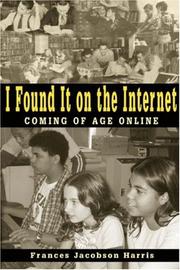
Harris, Frances Jacobson. I Found It On The Internet: Coming Of Age Online. Chicago : American Library Association, 2011. Print.
Wednesday, October 3, 2012
MOOC's and their Place in Libraries
The most recent Chronicle of Higher Education special report covers the fascinating world of Massive Open Online Courses (MOOCs). With a growing attention, participation, and curiosity about these offerings, we should start thinking about the role of MOOCs in our libraries.
Through interfaces like Coursera, EdX, and others, individuals now have access to a vast array of free, online courses offered by some of the top universities, including Harvard, MIT, Princeton, UC-Berkeley, and UVA. While these offerings are still somewhat amorphous, and do not currently offer credit, they do offer full-featured online class environments, including detailed assignments, and video-archived lectures and discussion forums. There is much still unsettled about these courses and how they will operate going forward, but there does seem to be a major groundswell for such offerings, from both the university perspective as well as the broader public.
Because there is such public interest in MOOCs, it is important for libraries to think about how such massive courses can support our principles. Just as collaborations between schools and libraries have proven to be so effective, collaborations between MOOCs and libraries also offer some great potentials. Of course, the relationship is a different one, though. One phenomena that has developed out of these MOOCS are local discussion groups forming and meeting in places like coffee-houses, libraries, etc. If the public library were to publicize this as a program it could further facilitate such peer connections, foster community, increase knowledge, and all cost the library very little. This also helps to overcome one of the major concerns over MOOCs, that they eliminate important face-to-face time.
There is also value in these courses, though, for teen service librarians. I can envision MOOC-inspired educational and informational programming for young adult users. Similar discussion groups based around a MOOC course or lecture are easy opportunities to capitalize on this popularity and hopefully bring teens into the library space. By offering college-style courses, certain teens who are seeking further enrichment have an environment to express that. Furthermore, from an informational perspective, what better way to give teens a sense of a college course, than to participate in a college course through MOOC? Just as teen programming often includes support for standardized test preparation, and college-seeking resources available in the library, they can also provide an environment to discuss a modeled college course through MOOCs.
I would be interested to hear of libraries that have started such programs and if they have found engagement with the public. Do you see other ways that MOOCs can be incorporated into libraries and the broader reading community? While much is still unkown concerning MOOcs, with the budget challenges that so many libraries face, the wealth of free instruction available should be seen as a valuable resource going forward.
Through interfaces like Coursera, EdX, and others, individuals now have access to a vast array of free, online courses offered by some of the top universities, including Harvard, MIT, Princeton, UC-Berkeley, and UVA. While these offerings are still somewhat amorphous, and do not currently offer credit, they do offer full-featured online class environments, including detailed assignments, and video-archived lectures and discussion forums. There is much still unsettled about these courses and how they will operate going forward, but there does seem to be a major groundswell for such offerings, from both the university perspective as well as the broader public.
Because there is such public interest in MOOCs, it is important for libraries to think about how such massive courses can support our principles. Just as collaborations between schools and libraries have proven to be so effective, collaborations between MOOCs and libraries also offer some great potentials. Of course, the relationship is a different one, though. One phenomena that has developed out of these MOOCS are local discussion groups forming and meeting in places like coffee-houses, libraries, etc. If the public library were to publicize this as a program it could further facilitate such peer connections, foster community, increase knowledge, and all cost the library very little. This also helps to overcome one of the major concerns over MOOCs, that they eliminate important face-to-face time.
There is also value in these courses, though, for teen service librarians. I can envision MOOC-inspired educational and informational programming for young adult users. Similar discussion groups based around a MOOC course or lecture are easy opportunities to capitalize on this popularity and hopefully bring teens into the library space. By offering college-style courses, certain teens who are seeking further enrichment have an environment to express that. Furthermore, from an informational perspective, what better way to give teens a sense of a college course, than to participate in a college course through MOOC? Just as teen programming often includes support for standardized test preparation, and college-seeking resources available in the library, they can also provide an environment to discuss a modeled college course through MOOCs.
I would be interested to hear of libraries that have started such programs and if they have found engagement with the public. Do you see other ways that MOOCs can be incorporated into libraries and the broader reading community? While much is still unkown concerning MOOcs, with the budget challenges that so many libraries face, the wealth of free instruction available should be seen as a valuable resource going forward.
Tuesday, October 2, 2012
The Library's "Ground Game"
As we move ever closer to election day, we hear more and more in the news about the importance of each political party's ground game. While this has been called the first social media election, and we have been fascinated with the high-tech campaign applications and the use of social networking, many in the media are once again pointing back to the old-fashioned ground game as a vital difference-maker in the next few weeks. Yahoo News's Walter Shapiro discussed this in a recent article, noting that while "the voter contact lists may be based on sophisticated
algorithms... the streetwalkers and the door-knockers of politics
still depend on time-honored techniques like broad smiles, practiced
pitches and infinite patience."
I think this is a great analogy to what we as librarians face today. We can encourage eye-catching technology, we can develop great city-wide and national programs, but in developing these advanced and complex plans, we can not ignore the importance of the "ground game." I see this often in the public libraries I visit. Access to great digital resources, and great web designs are important and do encourage users and visitors. Great pedagogically-sound early learning resources made publicly available in libraries offer another great opportunity to encourage early reading. But all these efforts are often only as effective as the on-the-ground interaction that librarians can provide for visitors.
The importance of the reference desk librarian can not be lost in the flood of technology. Similar to the political campaigns, it is the broad smiles, ready answers, and infinite patience of the youth services librarian that can make or break a child's experience with books and reading, or provide a care-giver with the critical resources to encourage such skills. A good reference desk librarian can help build a lifelong connection to the library. But the opposite is also true. As libraries face budget constraints, I too often find that the librarian sitting at the children's reference desk is not a specialist in that field, and is unable to provide users with the answers and resources they need. Alternatively, an aloof and disengaged reference desk librarian can similarly dampen user's experiences.
I am a major proponent of technology in the library. And I am also very committed to creating and disseminating learning resources to libraries to help encourage early reading. These programs and technologies can be essential to improving library usage and teaching best practices. But, it is important to remember that in most cases, these tools are only as valuable as "ground game librarians" can make them. We have to support our local and branch librarians to best facilitate the use of our far-reaching library resources.
I think this is a great analogy to what we as librarians face today. We can encourage eye-catching technology, we can develop great city-wide and national programs, but in developing these advanced and complex plans, we can not ignore the importance of the "ground game." I see this often in the public libraries I visit. Access to great digital resources, and great web designs are important and do encourage users and visitors. Great pedagogically-sound early learning resources made publicly available in libraries offer another great opportunity to encourage early reading. But all these efforts are often only as effective as the on-the-ground interaction that librarians can provide for visitors.
The importance of the reference desk librarian can not be lost in the flood of technology. Similar to the political campaigns, it is the broad smiles, ready answers, and infinite patience of the youth services librarian that can make or break a child's experience with books and reading, or provide a care-giver with the critical resources to encourage such skills. A good reference desk librarian can help build a lifelong connection to the library. But the opposite is also true. As libraries face budget constraints, I too often find that the librarian sitting at the children's reference desk is not a specialist in that field, and is unable to provide users with the answers and resources they need. Alternatively, an aloof and disengaged reference desk librarian can similarly dampen user's experiences.
I am a major proponent of technology in the library. And I am also very committed to creating and disseminating learning resources to libraries to help encourage early reading. These programs and technologies can be essential to improving library usage and teaching best practices. But, it is important to remember that in most cases, these tools are only as valuable as "ground game librarians" can make them. We have to support our local and branch librarians to best facilitate the use of our far-reaching library resources.
Tuesday, September 18, 2012
Library Leadership in the News
Check out this great article from Education Week.
Common Core Thrusts Librarians Into Leadership Role
Somebody referred me to this article this week and I think it is a great example of the role the modern school librarian can take in the larger administration going forward. As we go forward librarians will continue to be leaders in connecting curriculum. The article talks a lot about the common core and as curriculums become more and more cross-disciplinary, the library and librarians will be able to serve a greater role in offering both a space and human resources to facilitate those connections across subjects. The Common Core standards they speak of emphasize the inquiry-based models that cognitive studies research has supported.
These initiatives have not only brought more students and projects to the library--whether reading, writing, or research--but have also led to a significant increase in support for teachers as well as instructional opportunities for librarians through teacher-librarian collaboration. "Materials are almost secondary; it's really about helping teachers think about new ways to provide instruction and helping them see that there is someone in the building who already knows how to do that." noted librarian Jennifer LaGarde [check out her blog at http://www.librarygirl.net/]. More and more, librarians are being incorporated more fully into curricular development and planning, which stands to benefit the entire community. I think this is the next crucial step in placing libraries at the hub of academic settings. All this despite budget challenges to libraries, too. It is great to see such leadership roles being discussed beyond just the library community!
Do also check out the comments, though. I think they give you a really good sense about some of the resistance that core standards still face from many teachers and parents.
You will have to register as a guest to read it, but at Edweek, that's not a bad thing!
I hope you enjoy this quick read.
Subscribe to:
Posts (Atom)