Butterfly

Butterfly in the sky ... I can fly twice as high
Showing posts with label Curriculum. Show all posts

Wednesday, October 31, 2012

Pulling Back the Curtain on Libraries as a Teaching Tool

The mantra in 21st-century teaching in a nutshell is inquiry-based, experiential learning with scaffolding and modeling built in to structure the learning experience. These strategies and approaches can be better implemented in library instruction to improve media literacy.

I think one way for us to better tackle information literacy is to better explain and allow others to experience what it is that librarians do. User experiences in libraries have been improving dramatically thanks to the serious exploration into how users are searching for and utilizing information and library spaces. But while we think a lot about how users engage with librarians, library webpages, library resources and databases, we think less about these interactions as teaching moments. The reference librarian used to be able to guide patrons to databases and show them the steps needed to access sources. Now much of that has been turned over to always-accessible Libguides and similar "How-To" resources. None of these tools, though, really teach those skills in the ways that educational research and psychology reveal to be the most effective.

So the challenge remains, particularly for school librarians but also for public youth-service librarians, how can we better teach good media literacy practices and research skills and effectively incorporate them into an inquiry-based curriculum. Luckily, libraries tend to start with the advantage of having the computers and technology that can engage students and continue to operate as essential cognitive tools. Certain media activities and tools, such as photography, videography, social networking, even powerpoint, can be easily be utilized in active learning environments. 

Other skills, such as responsible researching, can be harder to maneuver. I could not agree more with Frances Jacobson Harris' critique of the worksheet as a largely ineffective tool for teaching students about source authority and evaluation. I do not believe that many of these "check-the-box/proceed-to-the-next-step" approaches improve student practices. While slightly more advanced than the "just say no" approach of telling children what is right and wrong, it ultimately lacks much application and engagement by the students. In her book I Found It on the Internet: Coming of Age Online, Harris has some great active-based learning examples that better engage the student. She incorporates quasi- and non-academic sources into a fuller discussion about the ways different news stories are covered in different outlets and platforms and asks students to discover these nuances. The most collaborative assignment she describes asks students to take the evaluation skills they learned and practiced in class back home to guide parents through a website, a great example of how far-reaching an effective collaborative assignment can reach.

I think more can be done, though, to be transparent to students about the research process today. As Harris notes of search engines, "the search process itself can mask authorship." A common assignment that I have seen asks children to find out how google works. Many are shocked to find out that few people really know due to the protected algorithm. But librarians can do more than just provide these "aha" moments. As Next-Generation Catalogs become more prevalent, it is important that librarians build in active assignments that help students better understand not only how google.com works, but also how the library OPAC works, and what exactly students may be finding through these sources, and the linked databases available to libraries.  We have lots of "how-to" guides, but fewer resources that engage the mechanics and finding structures of such tools.

One assignment I have been brainstorming is to allow children to choose and contrast a variety of different sources--either from a controlled list or open-ended--and then ask them to track the steps necessary to get that source from its initial production (writing, recording, creation, etc) to the computer screen the student now views. The teacher and librarian can model a few of these paths for students first and perhaps discuss some of the traits of search engines as well. By looking at the steps needed for a blog to reach the user, versus mapping the steps for an academic journal all the way through the library database subscriptions might help clarify the authorship component of evaluation. Furthermore, such assignments could be easily linked to other class components like student web publishing, and/or student-edited literary or research journals as well, making it interdisciplinary and collaborative. I think an important follow-up could be to ask students to turn that critical eye back upon their own publishing. How would another user see their publication through a critical evaluation lens? and are there ways to improve that authority?  These are important questions and concerns that can improve how students utilize the library and research.

There are some great ideas for teaching media literacy out there, and numerous media literacy toolkits. These can be valuable tools, but it is important to be sure that these tools are effectively reaching students. If we want students to be more media and research savvy, we have to trust that they can learn and understand the ways librarians incorporate and structure those media and research tools. As Harris notes: "We know from educational research and our own experience that such learning is most successful when it is built into activities that occur over time, across the curriculum, collaboratively, and in the context of application. It makes a great deal of sense to put students more directly in the driver's seat" (176). Lets try to pull back the curtain on library practices as much as we can, not only for our adult users, but also for our children and students.
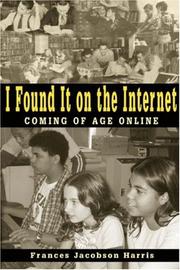

Cover of: I found it on the Internet by Frances Jacobson Harris


Harris, Frances Jacobson. I Found It On The Internet: Coming Of Age Online. Chicago : American Library Association, 2011. Print.


Thursday, October 11, 2012

Undergrads and Information Technology

Check out this great infographic from the Educause Center for Applied Research.
ECAR Study of Undergraduate Students and Information Technology, 2012
You can check out the whole study here.


Some of the interesting findings include the fact that students see blended-learning courses as the norm now, and expect to be able to use web interfaces to access course information. Perhaps more interesting, though, is how students use technology. Students desired a separation between much of their social networking tools (texting, facebook) and their course-work and interactions with their teachers. While students may not want teachers intruding on these social spaces, it is essential to be able to reach them through the devices they are using most: mobile smartphones. Schools do seem to be making a good effort to meet the mobile needs of their students and should continue to follow the models that are available.

I think the biggest takeaway from this study, though, is about students' attitudes towards technology and tech skills. Large majorities viewed technical proficiency as very important for their futures. And while many said they received adequate training, a majority still sought better training from their instructors, and nearly half felt they entered college without thorough preparation for using technology. Students were much more concerned about gaining these types of training than in utilizing the most cutting-edge technologies in their classes. It is important, then, for schools to prioritize skill-building exercises and resources to introducing "newer" and "better" technologies.

I think this holds particular relevance for K-12 librarians who can be the bridge to provide the better technical skill-training that students are looking for in their preparation for college. Technology is clearly an area of engagement for students, who see "real-life" skills they desire. This engagement can serve as a tool for librarians to enhance their role in inter-disciplinary curriculum and instruction. I think this ECAR study is a great resource to use to convince administrators of the importance of technology instruction and enhancing the library's role in the school environment.

What stands out to you from these ECAR findings?

Wednesday, October 3, 2012

MOOC's and their Place in Libraries

The most recent Chronicle of Higher Education special report covers the fascinating world of Massive Open Online Courses (MOOCs). With a growing attention, participation, and curiosity about these offerings, we should start thinking about the role of MOOCs in our libraries.

Through interfaces like Coursera, EdX, and others, individuals now have access to a vast array of free, online courses offered by some of the top universities, including Harvard, MIT, Princeton, UC-Berkeley, and UVA. While these offerings are still somewhat amorphous, and do not currently offer credit, they do offer full-featured online class environments, including detailed assignments, and video-archived lectures and discussion forums. There is much still unsettled about these courses and how they will operate going forward, but there does seem to be a major groundswell for such offerings, from both the university perspective as well as the broader public.

Because there is such public interest in MOOCs, it is important for libraries to think about how such massive courses can support our principles. Just as collaborations between schools and libraries have proven to be so effective, collaborations between MOOCs and libraries also offer some great potentials. Of course, the relationship is a different one, though. One phenomena that has developed out of these MOOCS are local discussion groups forming and meeting in places like coffee-houses, libraries, etc. If the public library were to publicize this as a program it could further facilitate such peer connections, foster community, increase knowledge, and all cost the library very little. This also helps to overcome one of the major concerns over MOOCs, that they eliminate important face-to-face time.

There is also value in these courses, though, for teen service librarians. I can envision MOOC-inspired educational and informational programming for young adult users. Similar discussion groups based around a MOOC course or lecture are easy opportunities to capitalize on this popularity and hopefully bring teens into the library space. By offering college-style courses, certain teens who are seeking further enrichment have an environment to express that. Furthermore, from an informational perspective, what better way to give teens a sense of a college course, than to participate in a college course through MOOC? Just as teen programming often includes support for standardized test preparation, and college-seeking resources available in the library, they can also provide an environment to discuss a modeled college course through MOOCs.

I would be interested to hear of libraries that have started such programs and if they have found engagement with the public. Do you see other ways that MOOCs can be incorporated into libraries and the broader reading community?  While much is still unkown concerning MOOcs, with the budget challenges that so many libraries face, the wealth of free instruction available should be seen as a valuable resource going forward.

Wednesday, September 19, 2012

Librarydoor: The Scarlet P ?

Check out this blog post and the Arthur cartoon about plagiarism:

Librarydoor: The Scarlet P ?: Try this  Plagiarism Arthur episode -- This is a short  winner. Not only does this short two minute cartoon support CCS   Writing 8 but it h...

Tuesday, September 18, 2012

Library Leadership in the News


 Check out this great article from Education Week.

Common Core Thrusts Librarians Into Leadership Role


Somebody referred me to this article this week and I think it is a great example of the role the modern school librarian can take in the larger administration going forward.  As we go forward librarians will continue to be leaders in connecting curriculum.  The article talks a lot about the common core and as curriculums become more and more cross-disciplinary, the library and librarians will be able to serve a greater role in offering both a space and human resources to facilitate those connections across subjects. The Common Core standards they speak of emphasize the inquiry-based models that cognitive studies research has supported.

These initiatives have not only brought more students and projects to the library--whether reading, writing, or research--but have also led to a significant increase in support for teachers as well as instructional opportunities for librarians through teacher-librarian collaboration. "Materials are almost secondary; it's really about helping teachers think about new ways to provide instruction and helping them see that there is someone in the building who already knows how to do that." noted librarian Jennifer LaGarde [check out her blog at http://www.librarygirl.net/]. More and more, librarians are being incorporated more fully into curricular development and planning, which stands to benefit the entire community. I think this is the next crucial step in placing libraries at the hub of academic settings. All this despite budget challenges to libraries, too. It is great to see such leadership roles being discussed beyond just the library community!

Do also check out the comments, though. I think they give you a really good sense about some of the resistance that  core standards still face from many teachers and parents.

You will have to register as a guest to read it, but at Edweek, that's not a bad thing!

I hope you enjoy this quick read.

Thursday, September 6, 2012

More on Accelerated Reader


In the first part, I discussed the merits of Accelerated Reader despite its failures to live up to its purported claims. In this post, I want to delve in a little deeper into some of the aspects of the incentives program, testing, and content that I find problematic. Do check out the

INCENTIVE: Accelerated Reader does offer a wealth of content. It provides the opportunity for school systems to instantly broaden the reading library for students. These are all tremendous advantages. However, by incentivizing the program, Accelerated Reader has driven students towards reading only those books that can earn them rewards, and/or that have testing developed to coincide with the reading. In any incentivized program, we do have to be wary of the reader’s motivation. We are trying to instill intrinsic motivations, so we do have to weigh the effect that extrinsic motivations will have upon long-term reading. Nancy Everhart, Eliza Dresang, M.B. Kotrla and others have done much to challenge AR’s incentives system.
COMPETITION: The underlying element of competition is problematic. Many summer reading programs have eliminated the individual competitive aspect of their programs because of concerns if it live up to best practices. Yet, it seems, AR promotes this.  As Everhart’s study shows, it does not appear that AR has taken into account the psychological impact of publicly tracking achievement and creating  a competitive environment. As Everhart and others have shown, often times such competitions can actually lead to a disengagement with reading for many participants. Furthermore, when these competitions are tied to points and incentives, many students end up strategically reading many short, low-reading level books in order to accumulate more points, thus really challenging the goals of the program and the underlying motivations.  
CONTENT: Further, AR promotes incentives while limiting the sources that can provide the student with those incentives.  While AR has a huge database of books available, those that can earn incentives are much more limited. These numbers are further limited when settings are instilled to limit reading material to various reading levels. Many also feel that these assigned reading difficulty levels are arbitrary and do more to harm than to help.  The result is that many children do not have the wealth of sources that the numerical database seems to promise. Furthermore, the gender distinctions that Everhart discusses are fascinating, and most often tied to content. Boys are reluctant to participate for fear of being seen as reading at low levels, much more so than girls. A lot of this is still tied to the limited content and the arbitrary designations that AR has built in to its program.
TESTING: Perhaps the biggest concern for me, though, is the testing dynamic of AR. In some schools the quizzes that AR provides are incorporated into student grading. On the surface, this seems to be reasonable, as time is being devoted to reading, so assessment should follow. However, a quick examination of those tests reveals the worst kind of assessment. As Dresang and Kotrla point out, rote memorization of book content is the only thing tested in AR quizzes. This places them at the base level of Bloom’s Taxonomy.[1] Comprehension, application, comparison, and analysis are utterly lacking. Rote memorization is NOT the best teaching practices of today.
I think we can see here why many experts have linked AR to success in NCLB testing. The flaws of NCLB have been detailed ad nauseum elsewhere, but the increased emphasis on quantifying results has led to more rote testing at lower levels of learning objectives.  It is thus not surprising that AR and NCLB would correlate highly, as Dresang and Kotrla have found.
Overall, I still believe there can be value in these programs. They do encourage reading, and if we believe in the ability of summer reading to motivate (often through community incentive) then we have to recognize the capability that AR has to do some of the same work. That said, the materials and curriculum provided are lacking. They fail to promote good cognitive learning.


SOURCES: Eliza T. Dresang, and M. Bowie Kotrla, “School Libraries and the Transformation of Readers and Reading,” in Handbook of Research on Children's and Young Adult Literature, ed Wolf et al, Routledge, 2010.

Everhart, Nancy, “A Crosscultural Inquiry into the Levels of Implementation of Accelerated Reader and Its Effect on Motivation and Extent of Reading: Perspectives from Scotland and England” American Association of School Librarians, Accessed September 5, 2012, http://www.ala.org/aasl/aaslpubsandjournals/slmrb/slmrcontents/volume82005/reader.


[1] Eliza T. Dresang, and M. Bowie Kotrla, “School Libraries and the Transformation of Readers and Reading,” in Handbook of Research on Children's and Young Adult Literature, ed Wolf et al, Routledge, 2010.


Wednesday, September 5, 2012

Why I am Leery about Accelerated Reader


On the one hand, Accelerated Reader is an amazing product. In one easy-to-use space, children, schools, and teachers have access to over 100,000 books.  This is a tremendous resource that can instantly grow a school library’s collection, particularly in lower-income districts.  Furthermore, studies have shown statistically significant improvement in standardized testing for those utilizing the Accelerated Reader model. However, many scholars and experts have challenged these results and many of the core elements of an Accelerated Reader program.

HOW IT WORKS: Accelerated Reader provides increased access to books, due to its mammoth collection, along with built-in additional time for student reading. It also has children take computerized tests on what they read that can then earn them points for their correct answers. These points can then be exchanged for prizes. Accelerated Reader has constructed a colossal incentive reading program that it claims encourages greater reading. 

There are many challenges to Accelerated Reader’s model. Stephen D. Krashen’s article, The (Lack of ) Experimental Evidence Supporting the Use of Accelerated Reader offers a rather scathing deconstruction of much of the research supporting the program.[1] If you are interested in the methodology do check out his fascinating article. Krashen proves, rather convincingly, that Accelerated Reader has, in some ways, been selling a bill of goods. By emphasizing the gains largely created by increased reading, the Accelerated Reader program is inculcating testing and incentives as interconnected. As he analogizes:
A hypothetical example may help us understand whether AR should be used or not. Drug A and Drug B are both designed to cure a specific disease. A is known to be effective with highly beneficial long-term effects. There is little evidence for or against B, but suggestive evidence that it may be harmful in the long run. A drug company produces AB, more expensive than A alone, and justifies it by providing studies showing that AB tends to be effective. A scientist reviewing the research shows that no study has compared AB to A alone. Clearly such studies are called for before the medical establishment endorses or even approves AB. A is providing access and time to read. B is tests and rewards. Accelerated Reader is AB.
Clearly the most important factors in improving reading are first, allocating time for reading, and second providing access to more books. And I think Krashen is right to really challenge the role of testing and incentives. From his findings, it seems that these latter two goals have no positive effects, and potentially harmful long-term effects. However, I would caution us against focusing ONLY on what Accelerated Reader does NOT do. Krashen dismisses Accelerated Reader because, “only aspect of AR that has a positive effect is the increased access to books and increased time to read them.” But this is a SIGNIFICANT thing. If Accelerated Reader can provide more children with greater access, and built in reading time, then that alone is providing a service. Is it perhaps overhyped and overvalued? Yes. But let us not undermine the importance of increasing reading time, period.

In the end, we have to see Accelerated Reader as only one tool in education, not a magic pill. While it may not live up to its initial expectations, if only by its insistence on building in more reading time and providing more content, it can  still be a valuable resource in many districts.


[1] Stephen Krashen, “The (Lack of ) Experimental Evidence Supporting the Use of Accelerated Reader,” Journal of Children's Literature (2003) vol .29 (2): 9, pp. 16-30. Accessed September 5, 2012,  http://www.sdkrashen.com/articles/does_accelerated_reader_work/ .